Why this exists
Your slicer shows grams.
Your bank shows the monthly total.
Nothing lives in between.
With one printer everything fits in your head. Add a few more and the first
thing you lose is the money: how much filament is actually left, what a specific print
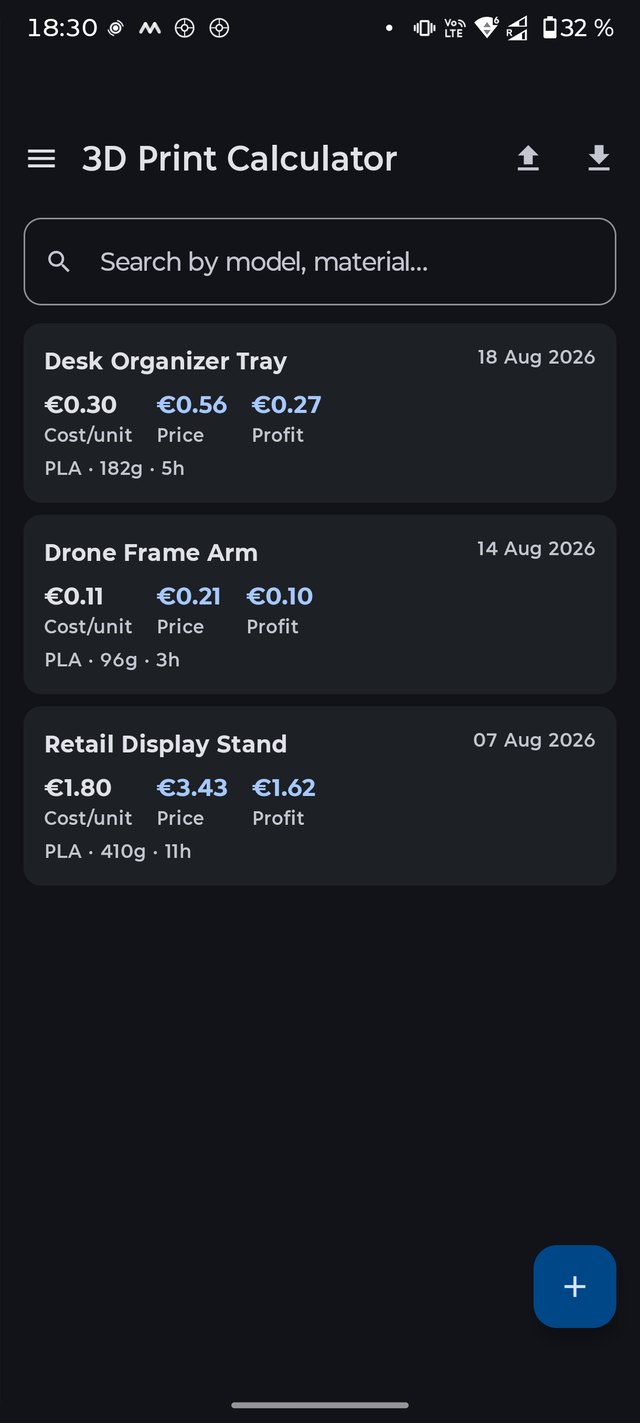
really cost once electricity and wear are counted, whether you made anything on that
order — or quietly paid for part of it yourself.
The usual fix is a spreadsheet, abandoned a month later because every print
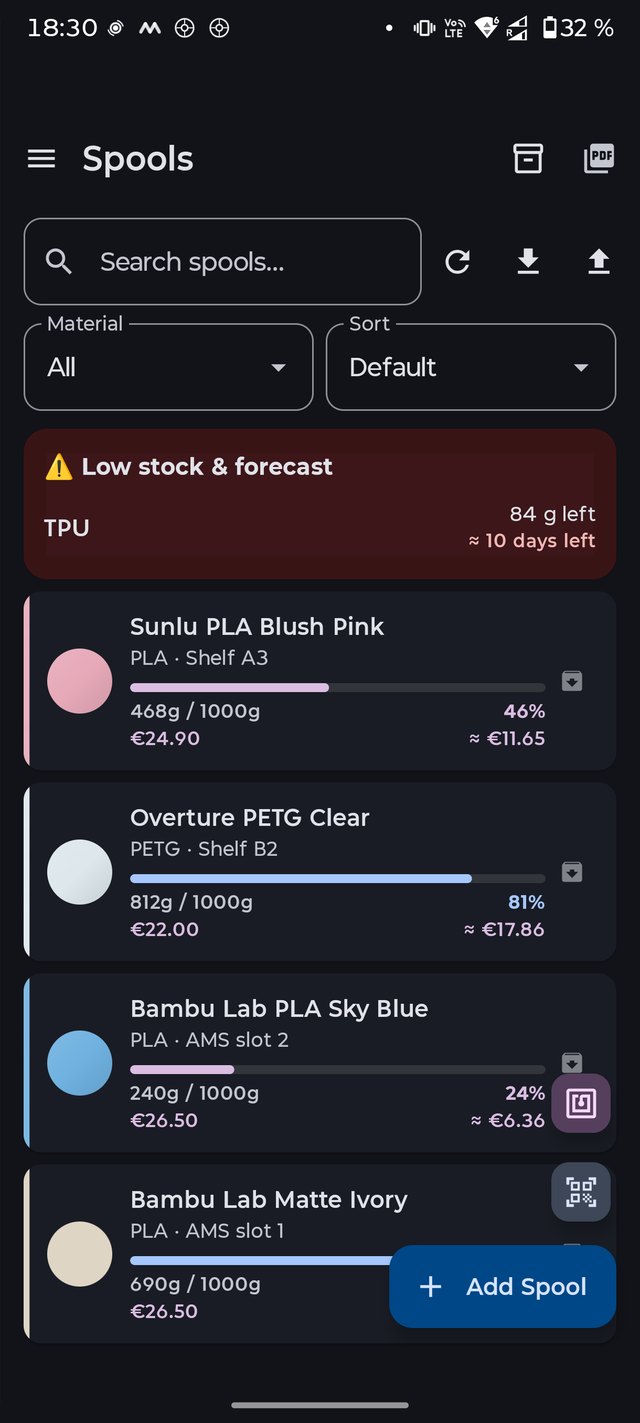
has to be entered by hand. SpoolFarm closes that gap on its own: it writes
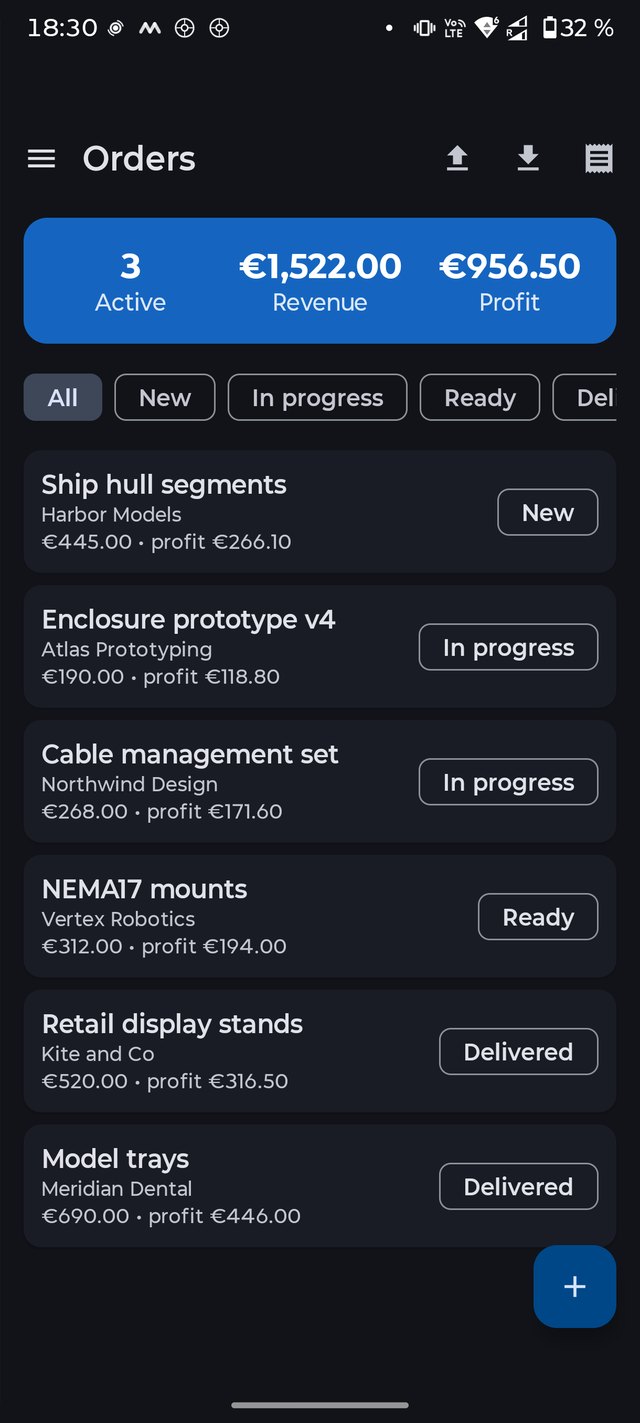
filament off when a print finishes, computes the real cost and shows the profit on every
order.
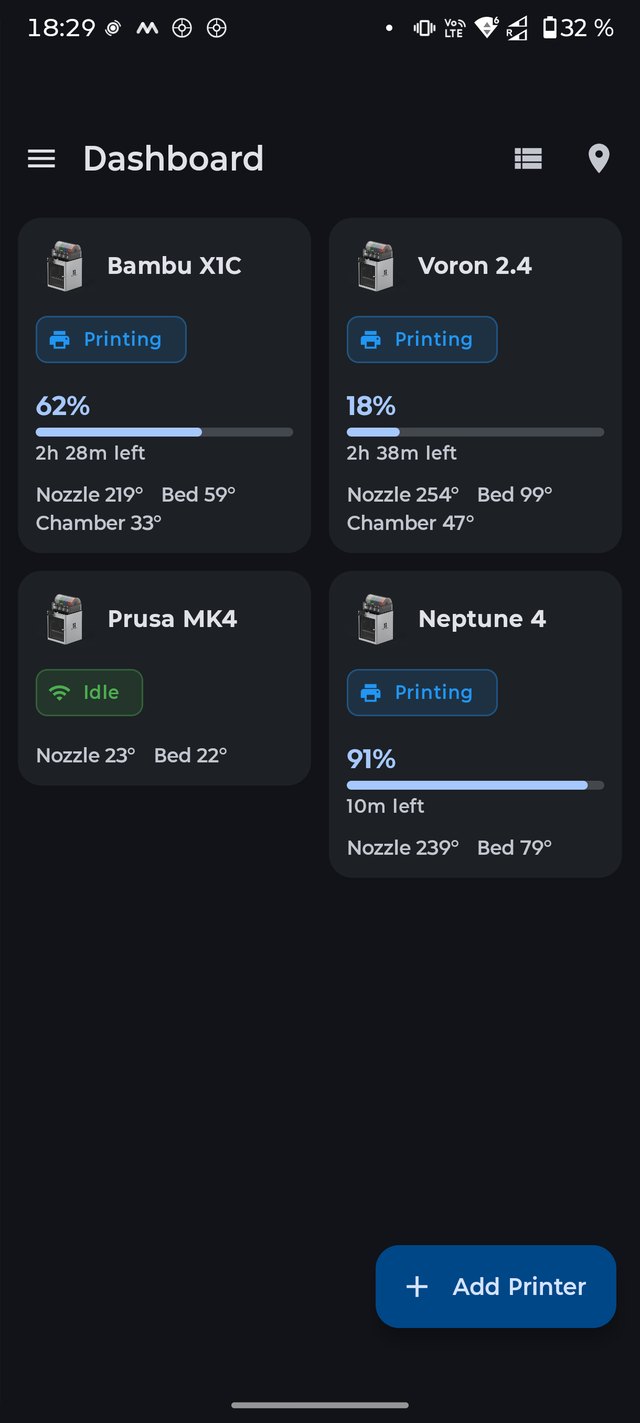
5printer ecosystems in one
list: Bambu Lab, Klipper, OctoPrint, Prusa, Duet
0servers, accounts, analytics
and ads — your data never leaves the phone
5cost items your slicer never
sees: plastic, electricity, depreciation, labour, failure rate
And five more screens
The ones you need less often, but without which the picture does not add up.
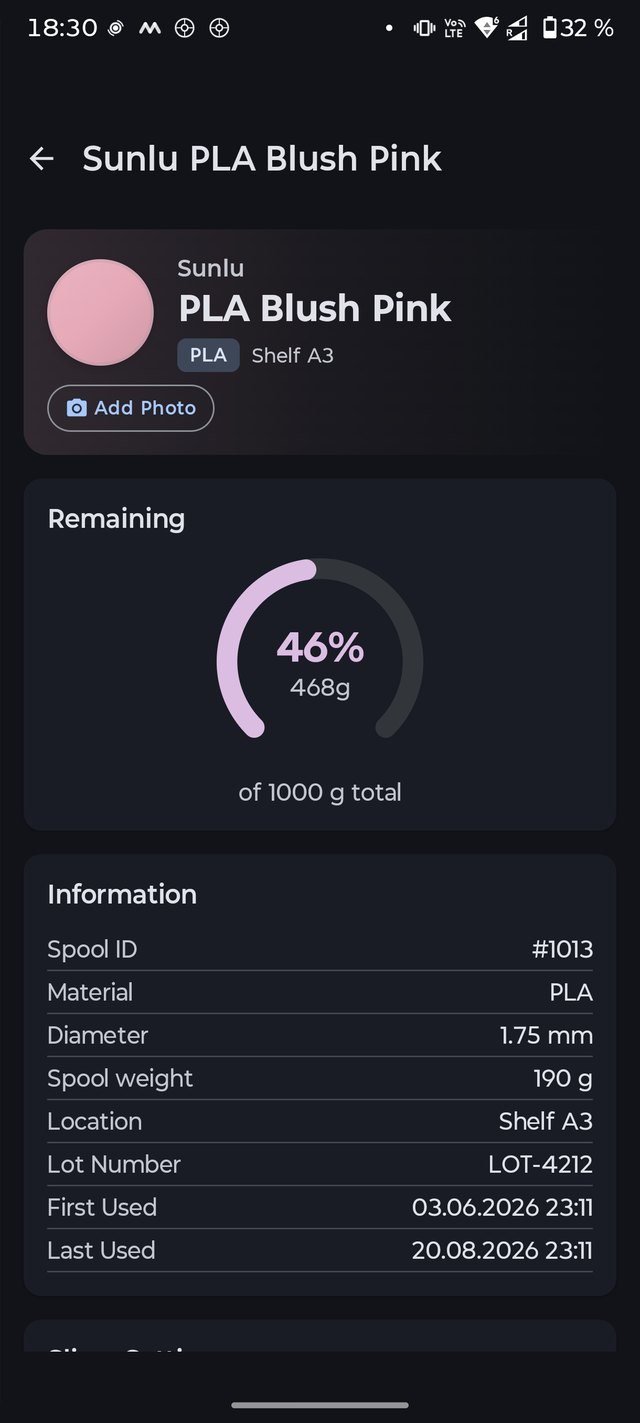
Spool card
Not “blue PLA”, but the full history of one spool.
- Grams and percent left, storage location and batch
- Price per kilogram and value of what remains
- Every print made from it, with its consumption
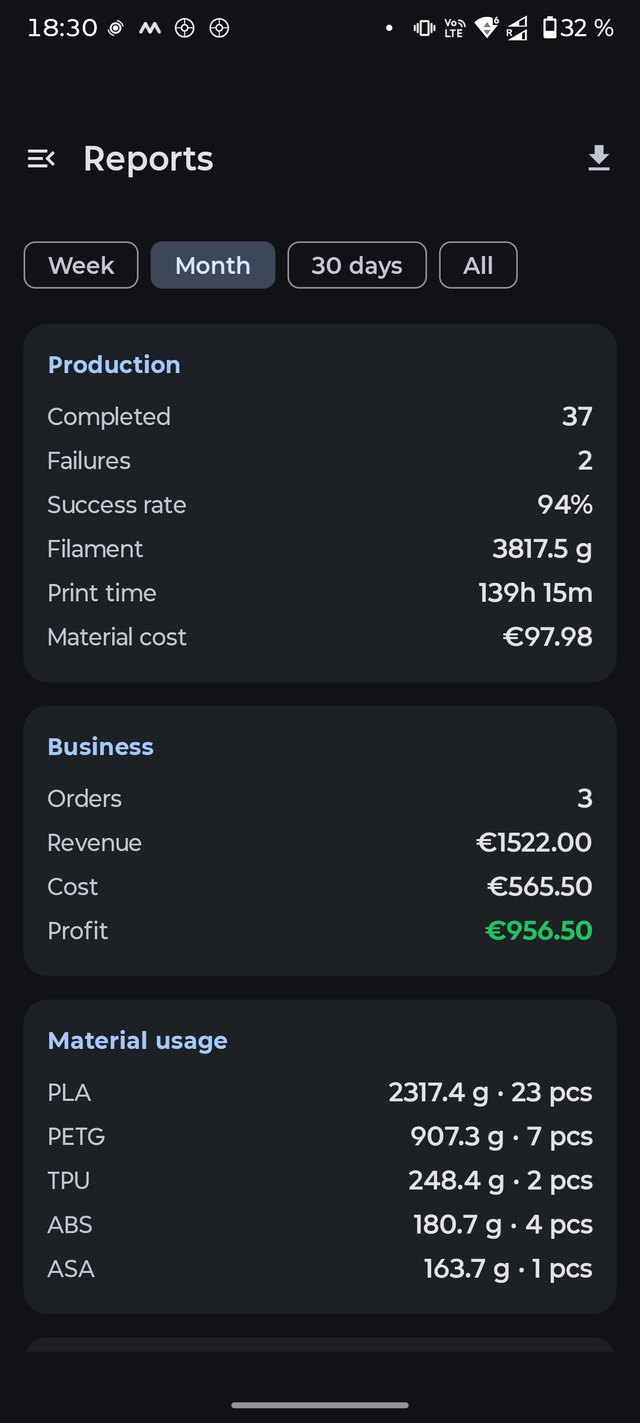
Reports
Two sides of the same week: what was printed and what was earned.
- Completed, failed, success rate
- Plastic used, print hours, revenue, profit
- Period: week, month, 30 days, all time
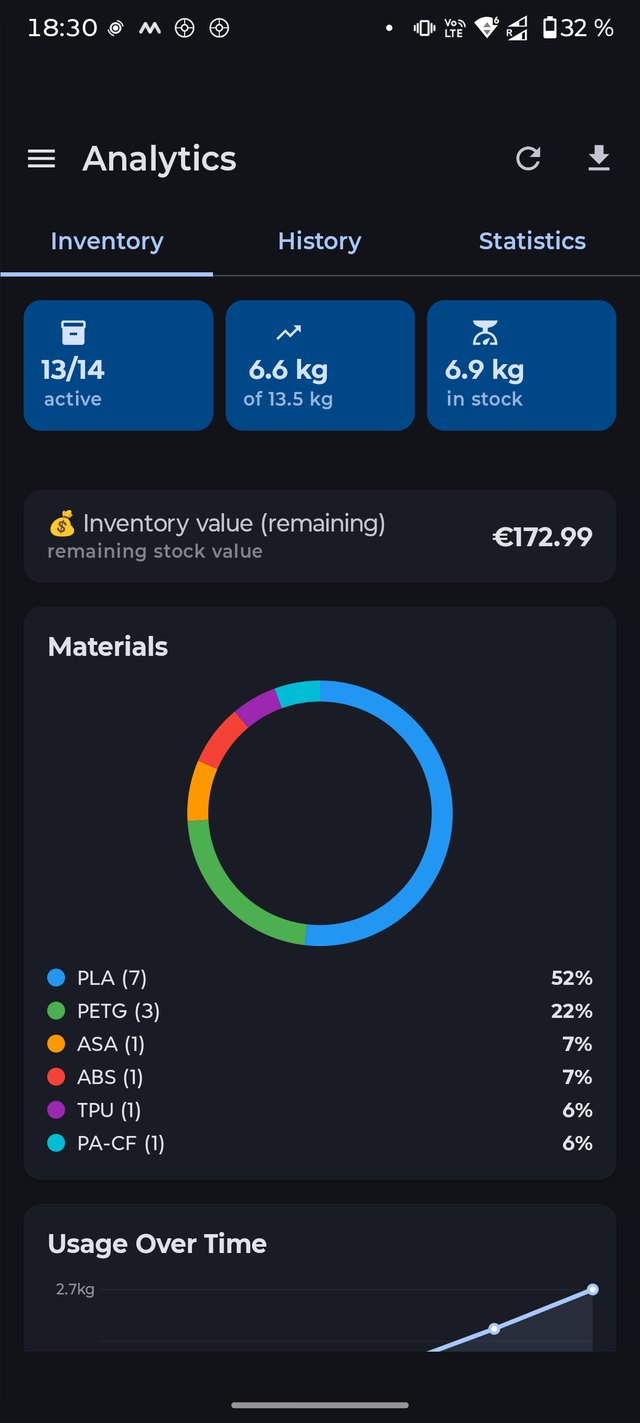
Inventory analytics
Where the plastic goes and how much money is frozen in stock.
- Stock value as a single figure
- Material shares: PLA, PETG, ASA, ABS, TPU, PA-CF
- Consumption over time and a per-printer breakdown
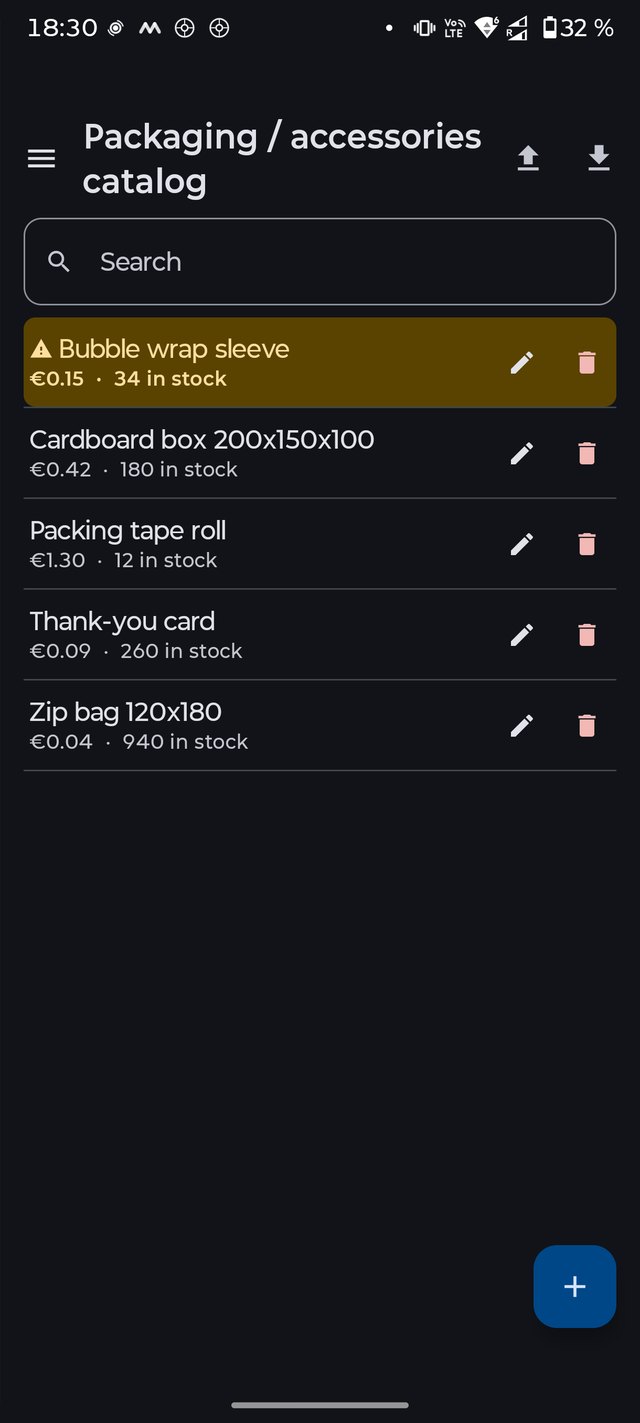
Packaging
Boxes run out just as quietly as plastic does.
- Bags, boxes, tape, cards — their own stock with prices
- Written off automatically per order line
- Low-stock warning
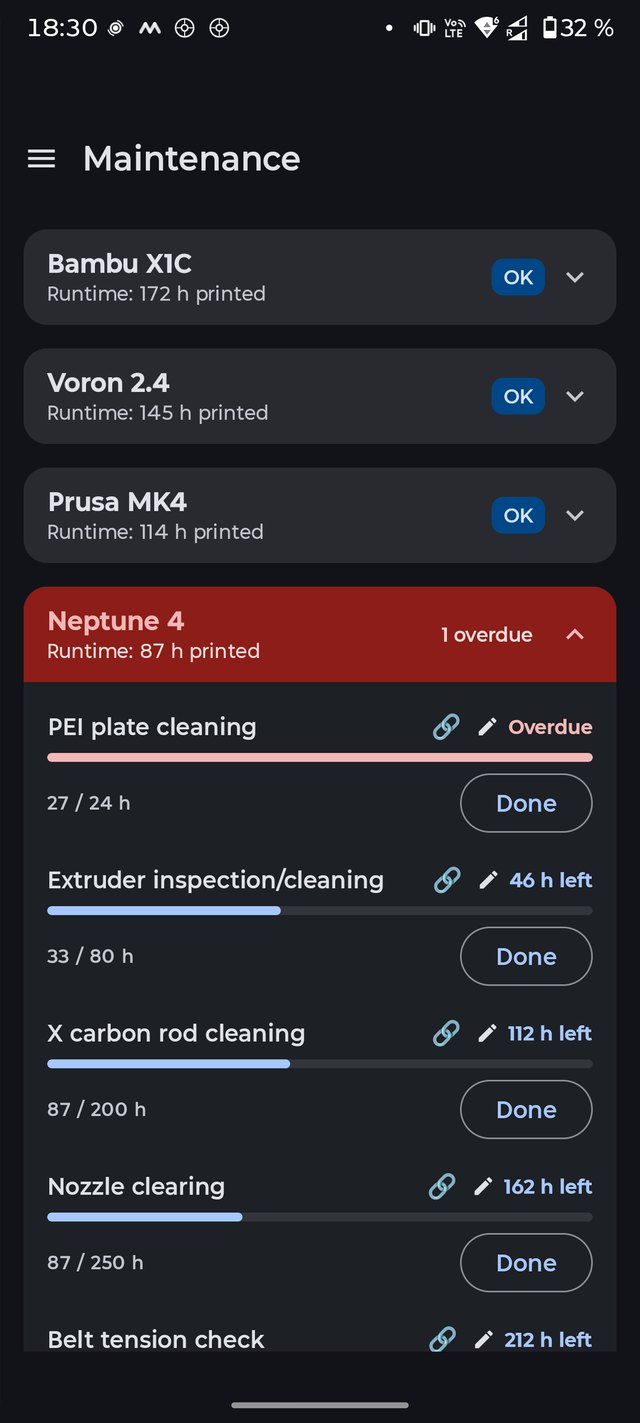
Maintenance
The printer reminds you itself — before it comes up in the middle of an order.
- Running hours for every printer
- Bed cleaning, extruder, belts, Z-axis lubrication
- Overdue tasks are called out separately
Off camera: notification settings, server mode with a web interface, the
filament loading wizard and K-factor profiles. The complete list is below.
How it differs from what already exists
The individual tools exist, and many of them are free. The difference is
that none of them answers “did I make money on this”, and none keeps printers of
different brands in one place.
| What a farm needs |
SpoolFarm |
Bambu Handy |
Mobileraker |
Spoolman + OctoPrint |
| Printers of different brands in one list |
Yes, 5 ecosystems | Bambu only |
Klipper only | OctoPrint only |
| Filament inventory with weight and price |
Yes | No |
No | Yes (Spoolman) |
| Write-off when a print finishes |
Yes, automatic | No |
No | Partly, via plugin |
| Costing: electricity, wear, failures |
Yes | No |
No | No |
| Price calculator before printing |
Yes | No |
No | No |
| Orders, profit, PDF invoice |
Yes | No |
No | No |
| Packaging stock |
Yes | No |
No | No |
| Analytics about money |
Yes | No |
No | No |
| Works without cloud or account |
Yes | Account required |
Yes | Yes |
| Needs a separate server or computer |
No, all on the phone | No |
No | Yes, always on |
Comparison as of August 2026, and only for the jobs a made-to-order farm
has to do. Each of these tools is strong in its own area: Mobileraker goes deeper into
Klipper, Spoolman is a mature inventory server, and OctoPrint has a plugin ecosystem a
mobile app cannot match.
Privacy is built into the architecture
There is no SpoolFarm server. The app contains no analytics, no crash
reporting, no advertising SDKs and no user accounts. The developer is technically unable
to receive your data.
Spools, orders, customer names and prices stay on the device. Data leaves the phone
only through integrations you configure yourself, and goes only to the address you
entered: your printer, your server, your bot. The app also works offline.
Privacy policy
· Terms of service